Qurbani & Aqiqah
What Does Qurban Mean?
The word Qurban means material or spiritual closeness. In Islamic terminology, it refers to a financial act of worship in which an animal is sacrificed with the intention of drawing closer to Allah.
It is known that the practice of sacrifice existed even in religions before Islam. Qurban is a significant act of worship that keeps alive the spirit of solidarity, compassion, and brotherhood within Islamic societies, building bridges of generosity between the wealthy and the needy
What Are the Types of Qurban?
Obligatory (Wajib) Qurban: The sacrifice that every financially capable Muslim is required to perform each year during the month of Dhu al-Hijjah.
Vow (Nadhr) Qurban: A sacrifice offered voluntarily by a believer who pledges it to become obligatory upon themselves. According to Islamic rulings, the person who made the vow, as well as their spouse, children, grandchildren, parents, and grandparents, cannot eat from this meat.
Aqiqah Qurban: A sacrifice offered as a form of gratitude to Allah for the birth of a child—preferably on the seventh day after birth.
Charity (Sadaqah) Qurban: A Qurban performed for the sake of earning Allah’s pleasure, with its meat distributed to those in need.
Gratitude (Shukr) Qurban: Offered to thank Allah for attaining a blessing or achieving a desired goal.
What Is the Aqiqah Qurban?
It is the sacrifice that a family offers to thank Allah for the birth of their child. The Arabs used the term “Aqiqah” to refer to the hair on a newborn’s head; hence, the sacrifice made for this reason is called the Aqiqah Qurban.
What Is the Ruling on the Aqiqah Qurban?
Scholars have differed on the ruling of the Aqiqah sacrifice. The Maliki, Hanbali, and Shafi’i schools consider it sunnah (recommended), while the Hanafi school classifies it as mandub—meaning it is not obligatory but an encouraged act of devotion.
When Can the Aqiqah Qurban Be Performed?
Based on various hadiths, Islamic scholars recommend performing the Aqiqah sacrifice on the seventh day after the child’s birth. According to a narration from Aisha (may Allah be pleased with her), if it cannot be done on the seventh day, it may be performed on the fourteenth or twenty-first day. However, offering it before or after these days is also permissible.
Does the Aqiqah Qurban Differ According to the Child’s Gender?
According to a narration by Tirmidhi, the Prophet Muhammad (peace be upon him) prescribed sacrificing two animals for a newborn boy and one for a girl. Scholars state that offering two animals for a boy is more virtuous for those who can afford it, but offering one is also acceptable.
Who May Eat from the Aqiqah Qurban?
The meat of the Aqiqah sacrifice may be eaten by the family, relatives, neighbors, and the poor—allowing all to benefit.
What Is the Vow (Nadhr) Qurban?
A Nadhr Qurban is a sacrifice made voluntarily by a Muslim who vows it upon themselves, even though it is not a religious obligation. It is usually offered to seek Allah’s protection, help, or blessings.
What Is the Ruling on the Vow Qurban?
The Vow Qurban is not inherently obligatory in Islam. A Muslim may make such a vow at any time, provided it does not cause financial hardship. The essential point is that the person should not make a vow that would place them in difficulty.
When Can the Vow Qurban Be Performed?
There is no specific time restriction for offering a Vow Qurban—it may be performed at any time of the year.
Who May Eat from the Vow Qurban?
Based on Islamic jurisprudence, the person who made the vow and their immediate family (spouse, children, parents, and grandparents) may not eat from this meat. It must be distributed entirely among the poor and those in need.
What Is the Obligatory (Wajib) Qurban?
It is a sacrifice offered with the intention of drawing closer to Allah and earning His pleasure. Every financially capable Muslim must perform this sacrifice each year during the Islamic month of Dhu al-Hijjah. It involves sacrificing specific animals according to Islamic rulings. While most schools of thought consider it sunnah, the Hanafi school considers it wajib (obligatory).
Who Is Required to Offer a Wajib Qurban?
A person must be Muslim, sane, and financially capable. Financial capability is defined as possessing wealth equivalent to or exceeding 85 grams of gold, after covering debts and essential needs.
Until When Can the Wajib Qurban Be Performed?
To be valid, the Qurban must be performed within the prescribed period—from after the Eid prayer until sunset on the third day of Eid (fourth day for the Shafi’i school).
Which Animals Are Suitable for Qurban?
The animals eligible for sacrifice are sheep, goats, cattle, camels, and buffalo. There is no difference between males and females.
Sheep and goats are sacrificed for one person.
Cattle and camels may be shared by up to seven people.
The animals must reach the required age:
Sheep and goats: one year
Cattle and buffalo: two years
Camels: five years
They must also be healthy and complete in their limbs. Severely weak, blind, or deformed animals are not valid for Qurban. Slight defects, such as a missing tooth or a small ear cut, are permissible.
What Should Be Considered During Qurban Sacrifice?
The sacrifice must be made solely with the intention of worship. The animal should not be harmed, and it must be laid on its left side facing the Qiblah. If possible, the owner should perform the slaughter personally; otherwise, they may appoint someone on their behalf. It is recommended that the owner be present during the sacrifice.
Before slaughter, it is sunnah to recite verses 79, 162, and 163 of Surah Al-An’am and to make dua, takbir, and tahlil.
A sharp knife should be used to avoid causing pain. The one performing the slaughter should recite “Bismillahi Allahu Akbar.” According to the Hanafi school, if the name of Allah is deliberately omitted, the meat becomes impermissible; if forgotten unintentionally, it is still valid.
The meat of the Qurban cannot be sold since the sacrifice is made solely for Allah’s pleasure. The owner may eat from it, share it with others, and distribute a portion to the needy.
How to Make a Qurban Donation
To donate a Qurban within Uganda:
- You can make an online donation through our website.
- You can transfer your donation via EFT or bank transfer.
- You can contact our representatives directly.
- You can call our hotline/Whatsapp/Viber at
+256 771 907 568 - Email: info@sanyucharity.org
How Are the Qurbans Performed?
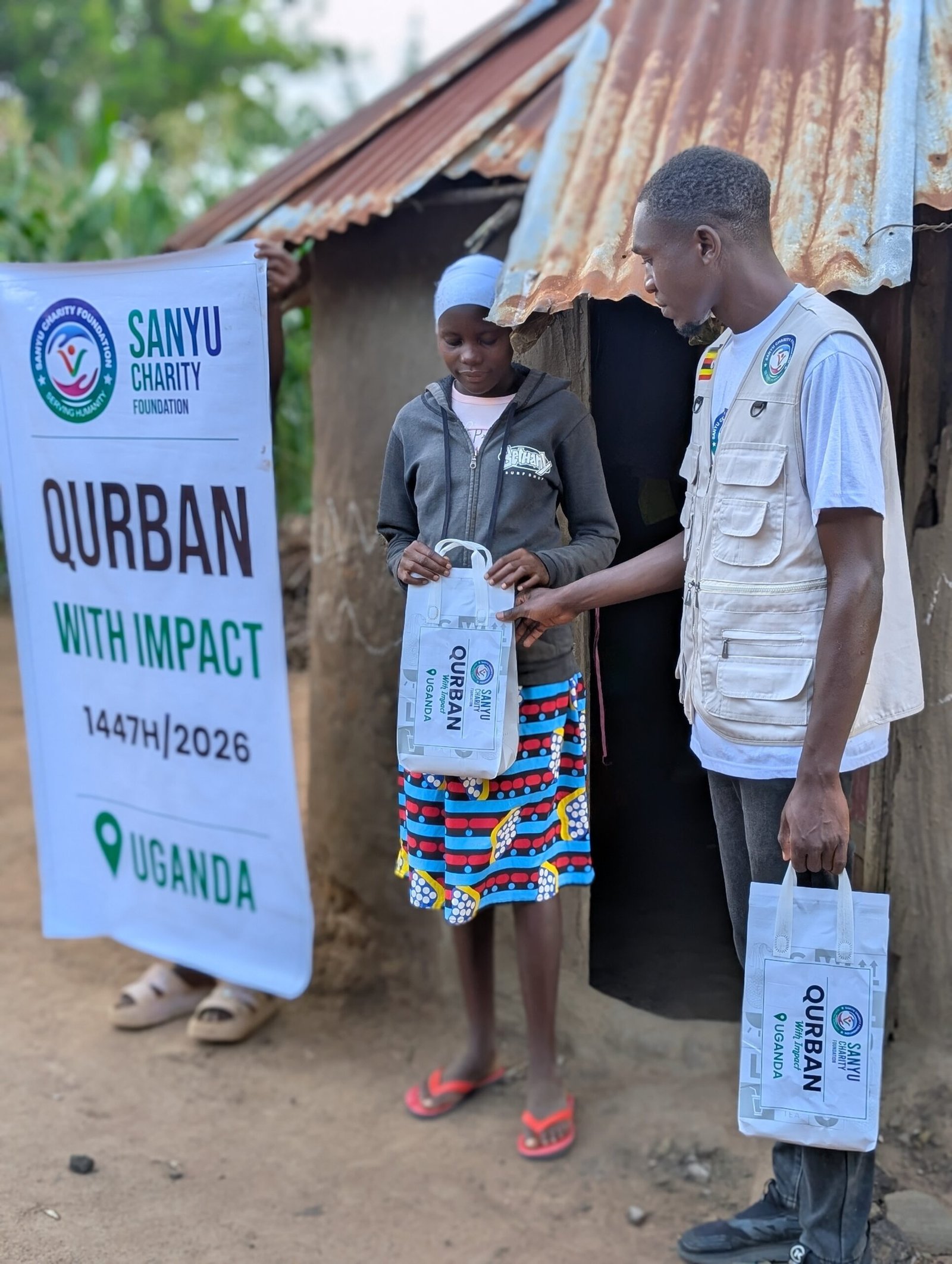
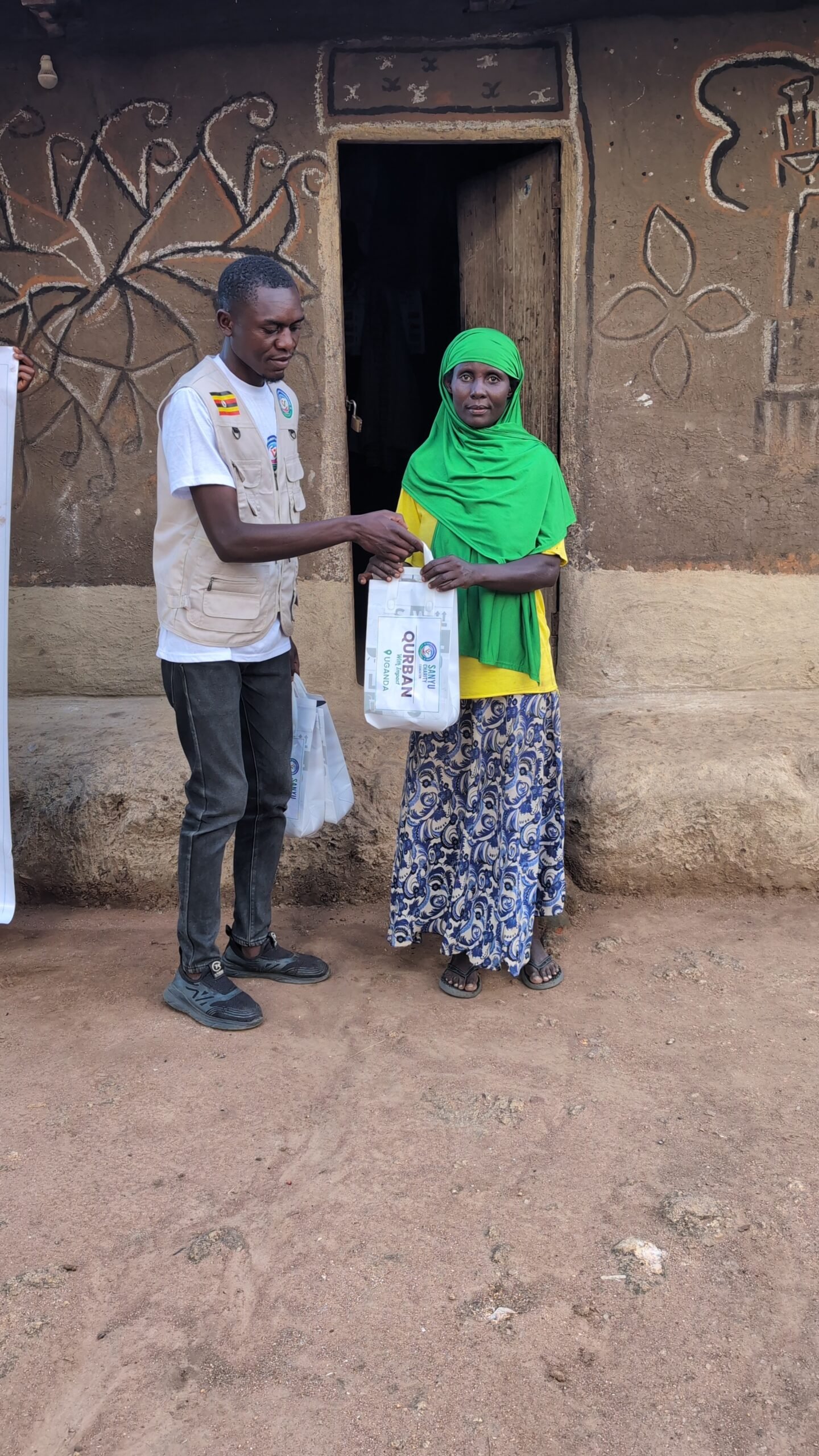
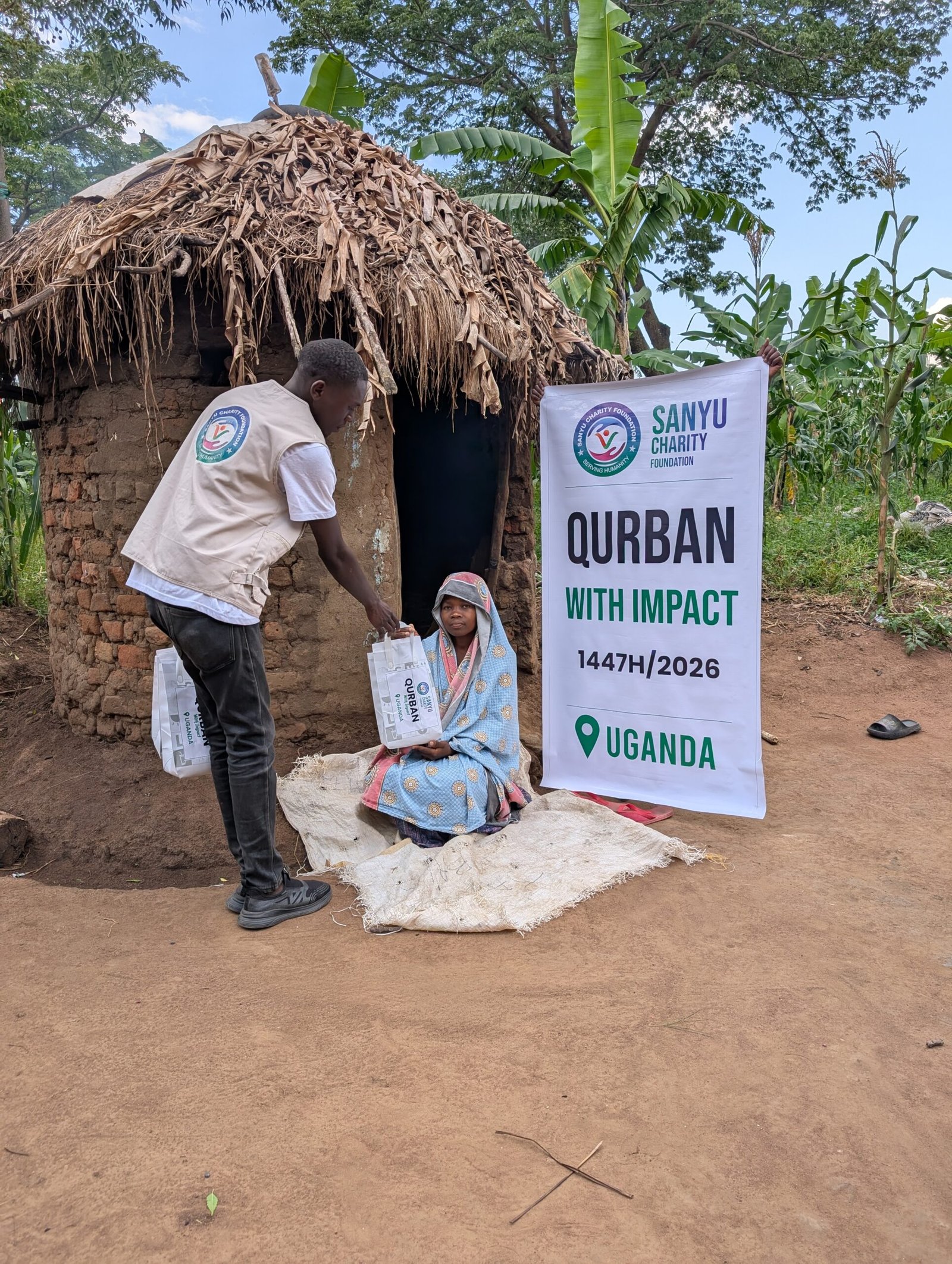
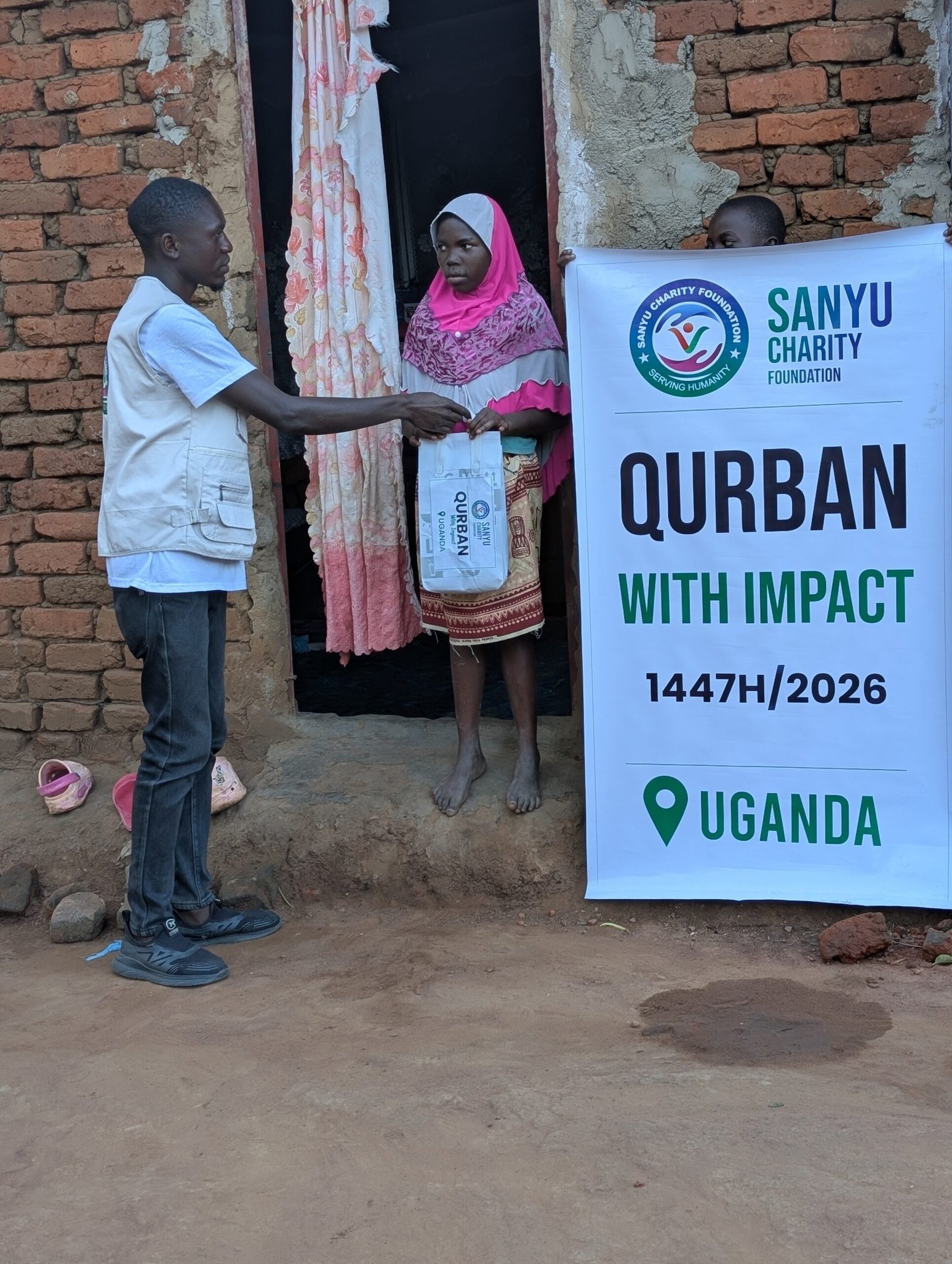
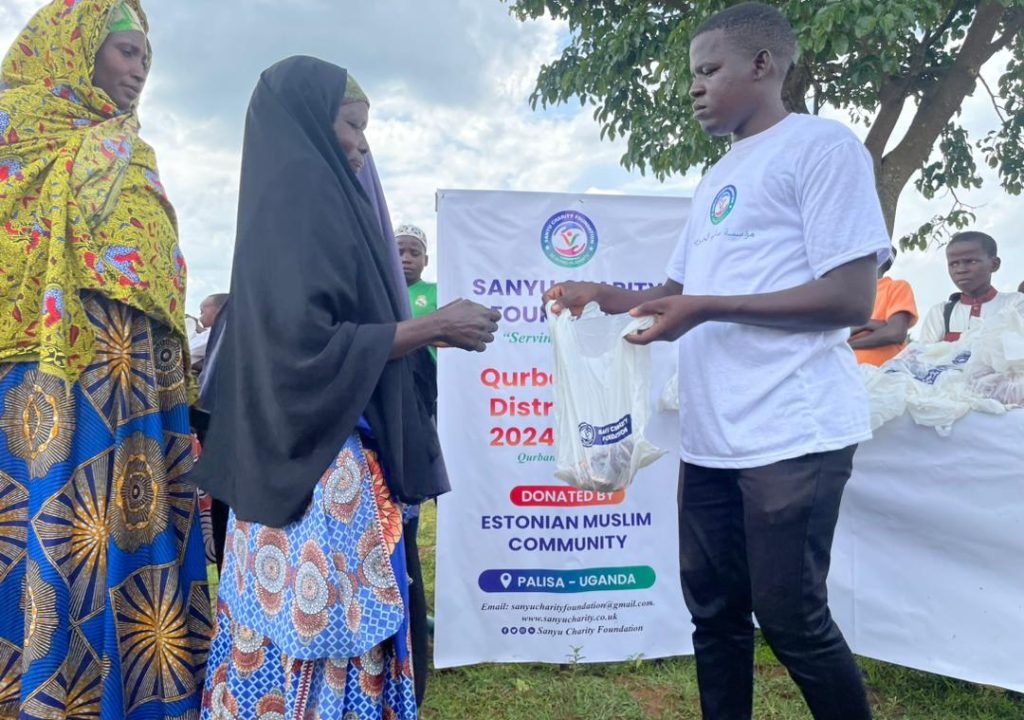
After you donate and authorize the Qurban, our representatives and volunteers carefully purchase suitable animals in Uganda. After the Eid prayer, the sacrifices are performed in full accordance with Islamic guidelines and hygiene standards. Large cattle are sacrificed, divided into seven shares per animal. Each donor’s share is included within one of these groups.
How Can I Access My Qurban Video?
Once your Qurban has been sacrificed, you will receive a notification message on your phone . A few days later, a video link of your Qurban will be sent to you via SMS and WhatsApp.